
Resilient Aging
Becoming an Elder, One Season at a Time

A few weeks from now I will celebrate my seventy-ninth birthday.
Friends sometimes ask what it feels like to be an older adult, approaching eighty. The truthful answer changes from day to day. Some mornings I notice limitations that weren’t there a decade ago—a body that negotiates rather than obeys, friends whose names now appear more often in obituaries than birthday cards, and the growing awareness that time has become precious in an entirely new way.
Yet alongside these realities, I’ve noticed something unexpected.
There are moments when I feel younger than I did at fifty—not because my body has become younger, but because life itself feels more immediate. Less cluttered. Less concerned with proving anything. More interested in simply being present.
That discovery has inspired a new occasional series on this Substack: Resilient Aging.
I don’t write as an expert standing at the finish line. I write as a fellow traveller—still learning, still forgetting, still grieving, still laughing, still practising. My hope is that together we can explore how to grow older with courage, curiosity, coherence, humour and compassion.
For many years our culture has been captivated by “anti-aging.” More recently we’ve become interested in “healthy aging.” Both have their place. Caring for our bodies is a sacred responsibility.
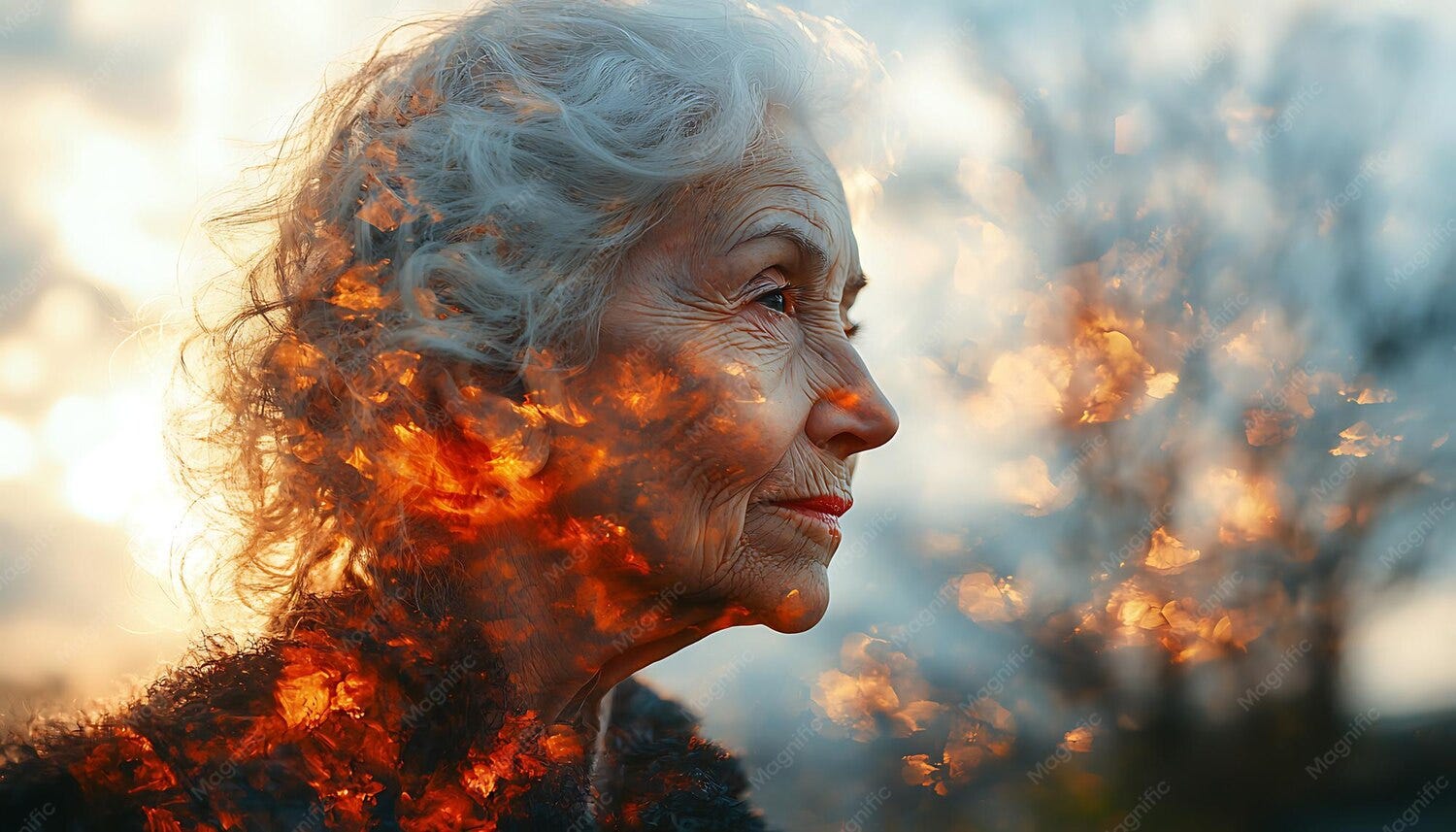
But I find myself increasingly drawn to a different question:
How do we become more fully human as we grow older?
Growing old is inevitable. Becoming an elder is a practice.
That distinction feels important. Society has many elderly people. It has relatively few elders. Years alone do not create wisdom. Wisdom emerges when experience has been slowly metabolized into compassion, perspective, humility and service.
Perhaps the greatest misunderstanding about aging lies in the metaphor we commonly use. We speak of old age as the winter of life.
There is truth in that image. Winter asks us to slow down. It strips away what is no longer essential. It reminds us that life has seasons and that letting go is woven into the fabric of existence.
Yet winter has acquired a rather gloomy reputation. We often associate it with endings: “It’s all downhill from here.” “The best years are behind us.” “End of the road.” “We’re approaching the big D.”
Nature tells a more hopeful story:
Winter is never static. Beneath frozen ground, roots continue their quiet work. Seeds rest, not because they are dead, but because they are preparing. Even the shortest day marks the return of the light.
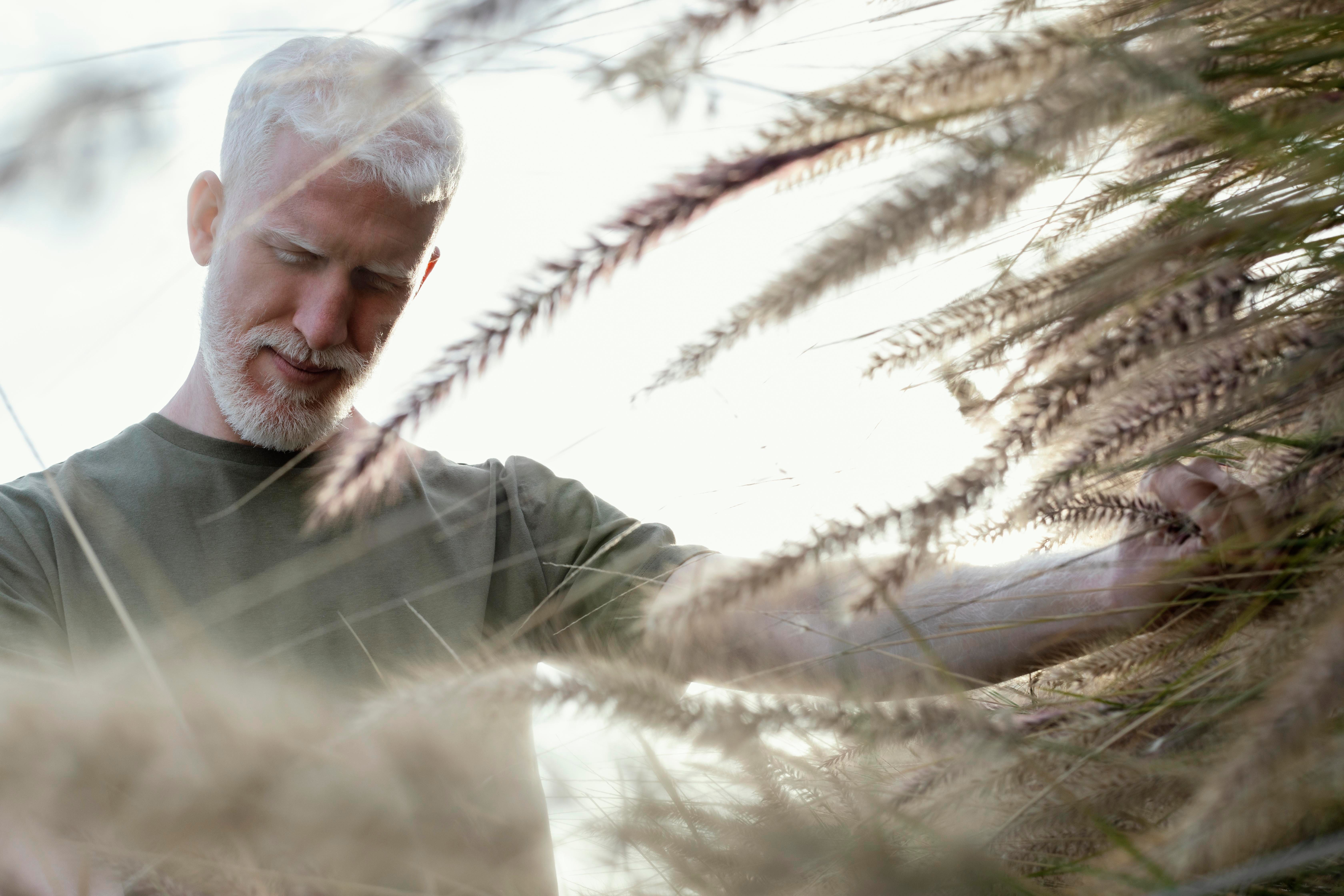
This has led me to another thought: Perhaps life has its great seasons, but each great season contains countless smaller ones.
Yes, we may be in the winter of our lives. Yet within that larger winter we can still experience a springtime of new learning, friendships and creativity; a summer of spiritual flowering; an autumn of integration and wisdom-building; and another winter of surrender, simplicity and quiet peace.
The cycles continue.
This way of seeing resonates with many wisdom traditions, including Indigenous teachings that honour the circle rather than the straight line. While different First Nations hold distinct understandings of the Medicine Wheel, many share a profound appreciation for the cyclical nature of life. Instead of imagining time as an arrow racing toward an ending, they invite us to experience life as a circle—or perhaps even better, a spiral.
We return to familiar places. But never as the same person.
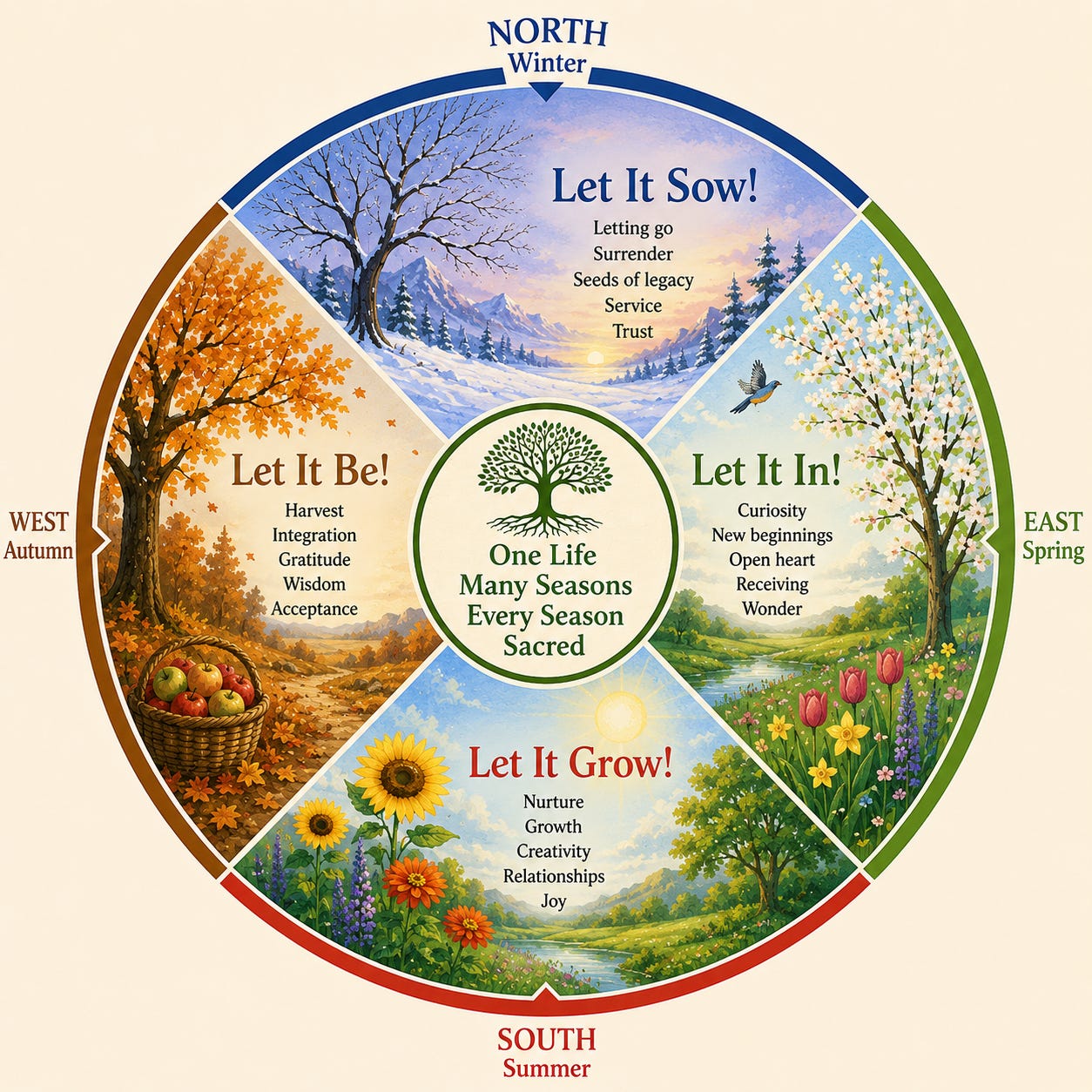
As I reflected on these inner seasons & sub-cycles,
four simple invitations emerged:
• Spring (East): Let it In.
Remain curious. Welcome new friendships, fresh ideas, surprising opportunities and unfamiliar perspectives. As long as we are alive, we remain capable of wonder.
• Summer (South): Let it Grow.
Nurture what truly matters. Relationships. Creativity. Practice. Love. Joy. Continue becoming, even if the pace is gentler than before.
ª Autumn (West): Let it Be.
Harvest what life has taught us. Learn discernment. Release perfectionism. Allow gratitude to mature into wisdom. Not everything requires fixing.
• Winter (North): Let it Sow.
This may sound unexpected. We often imagine winter as the season of endings, yet perhaps it is also the season of planting invisible seeds. Our stories, our presence, our forgiveness, our encouragement and our example may bear fruit in lives we will never see. This is the quiet work of legacy.
There is another form of letting go that becomes increasingly important as we age.
The Buddha taught that suffering is not caused only by pain itself, but by our relationship to it—our grasping, resisting and clinging. One of my favourite teachers, the Tibetan, Chögyam Trungpa, spoke of the “neurotic crimes” we commit against ourselves: endless worry, obsessive thinking, self-blame and unnecessary struggle.
Perhaps one of elderhood’s greatest invitations is not merely to let go of possessions, careers or social roles, but to loosen the grip of the controlling mind itself.
As the body naturally slows, perhaps consciousness can deepen.
As certainty softens, perhaps compassion expands.
As ambition quietens, perhaps presence ripens.
This, to me, is not resignation. It is liberation.
I also hope this series will explore the practical realities of aging. Together we’ll reflect on health—both medical and holistic—finances, mobility, grief, changing relationships, purpose after retirement, friendship, loneliness, voice, nervous system resilience, creativity, and the simple daily practices that help us remain grounded. I’ll share interviews with remarkable people, reflections from psychology, neurobiology, spirituality and the world’s wisdom traditions, along with some of the Korason and Hakomi Method practices that have helped me and others cultivate greater coherence, resilience and authentic presence.
And yes, we will also speak about death. Not morbidly, but honestly.
Our culture often avoids the subject until it becomes unavoidable. Yet many wisdom traditions have regarded preparing for death as one of life’s greatest arts. In future articles we may explore insights from the Tibetan and Egyptian Books of the Dead, the Mayan Popol Vuh, the Bahá’í writings, Buddhist teachings and other traditions that invite us to prepare, not only for a good death, but for the springtime of whatever life may hold beyond this one.
If spring teaches us how to begin, perhaps elderhood teaches us how to complete. And perhaps completion is not really an ending at all. Perhaps it is another sowing.
My hope is that Resilient Aging becomes less a series of articles than an ongoing conversation—a gathering place for fellow travellers navigating this extraordinary stage of life. We will share our losses without allowing them to define us, celebrate our discoveries without denying our limitations, and encourage one another to grow in wisdom even as our bodies gradually relinquish their youthful powers.
After all, resilience is not about resisting the passage of time.
It’s about learning to dance with it.
One season at a time.
An Invitation to the Forest of Elders
If these reflections resonate with you, perhaps you, too, have been sensing that elderhood is not simply the final chapter of life, but the beginning of a different way of living.
Our culture offers countless messages about avoiding aging, delaying it, or fighting it. Far fewer conversations explore how we might become wise, resilient, compassionate and deeply alive as we grow older.
That is the intention behind this emerging project.
I like to imagine it not as a program, but as a Forest of Elders.
In a forest, no two trees are alike. Some stand tall and shelter others. Some flower late. Some have weathered fierce storms. Some have lost branches yet continue to offer beauty and shade. Even their fallen leaves are not wasted. They gradually become rich humus, nourishing the soil from which future generations will grow.
Perhaps our lives are much the same.
Our joys and sorrows, successes and disappointments, discoveries and losses, the wisdom patiently gathered through decades of living—all become part of the fertile ground that supports one another and those who follow us.
No one in this forest is expected to have all the answers. We come, rather, as fellow travellers. We listen as much as we speak. We discover that wisdom is less something we possess than something that quietly emerges between us through authentic dialogue, shared practice, humour, silence, music, compassion and presence.
Like a healthy forest, we nourish one another.
As this community gradually takes shape, I imagine three gentle pathways for exploration.
• The first is the Articles (& occasional interviews with fellow-elders) here on Substack - reflections such as this one, exploring the many branches of resilient elderhood: health and healing, relationships, grief, purpose, finances, creativity,. collaborating with AI, spirituality, preparing for death, and above all, the art of living fully in the present season of our lives.
• The second is the Circle—an occasional online gathering where we can meet face-to-face, share our stories, experience simple Korason Method practices for cultivating nervous system resilience and authentic voice, and discover the strength that comes from travelling together.
• The third is the Journey—a deeper series for those who wish to continue exploring together over time through conversation, experiential practices, guest interviews, contemplative exercises and the mutual encouragement of a growing community.
My hope is that this becomes less a course than a living ecosystem of friendship and learning.
One of the quiet discoveries of elderhood may be that while our bodies inevitably change, our capacity to deepen, to love, to serve, to laugh, to forgive and to sow seeds for future generations can continue to grow.
Growing old is inevitable. Becoming an elder is a practice. If you feel drawn to this vision, I warmly invite you to walk into the Forest with us. There is room beneath these trees for every season of your life.
And who knows? Together we may discover that our own gently falling leaves become part of the rich soil from which new hope, new wisdom and new life will continue to grow—for one another, for those who come after us, and for the larger forest of humanity.
The first Resilient Elderhood Circle will be held on Zoom: Sept. 6th, 2026
• Info. & Register: https://hughsmiley.com/resilient-elderhood/:
Thank you from an elder who would like to highlight these 3 thoughts within your most inviting article:
As the body naturally slows, perhaps consciousness can deepen.
As certainty softens, perhaps compassion expands.
As ambition quietens, perhaps presence ripens.
Well done and a great opportunity to build a community of elders who are also now the largest demographic. Love the image of trees in the forest as interdependence is part of being a tree. Happy birthday.marcia