
Regulating Fear through Conscious Sounding
The Korason Method and the Toroidal Heart

KM Module 6: This is the preamble to a Zoom workshop I facilitated with 18 Russian students, including many psychotherapists this past weekend.
From Voice to Authentic Dialogue
In the Korason Method (KM) for Authentic Voice & Dialogue, we understand the voice not simply as a physical instrument or a vehicle for words, but as a whole-body expression of our inner state. The sound we make, the way we speak, and even the way we listen are shaped moment by moment by the nervous system, by emotion, and by our relational history.
From a scientific perspective, this work is strongly supported by neuroscience and somatic psychology. Research in polyvagal theory shows that vocal tone, rhythm, and flexibility are direct reflections of autonomic nervous system state. When we feel safe, the voice naturally becomes more resonant, nuanced, and relational. When there is fear, threat, or shame, the voice often constricts, flattens, or fragments. This means that the voice is not only expressive - it’s diagnostic.
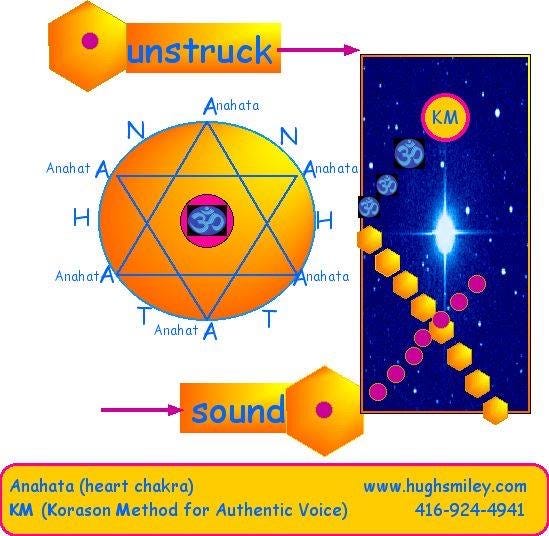
In the first five modules of this training, we focused on learning Korason Method Articulations, or KMAs, and on developing embodied awareness through sound - mindful & conscious utterance of vowels corresponding to the 7 major chakras (energy centres) & consonants that add specificity in application.
These practices helped establish safety, curiosity, and a shared experiential language. They also assisted in discovering and cultivating an enhanced natural voice of ease, power and creativity. Module 6 marks an important transition. From this point on, the emphasis shifts from how the physical voice sounds to what interferes with authentic communication and compassionate dialogue.
Here, fear (the mother or grandfather of emotions) becomes a central subject of study. Fear is not just a mental or emotional experience; like the trauma that often accompanies it, it lives in the body. It affects breath, muscle tone, posture, hearing, and vocal expression. Using polyvagal theory as a framework, we begin to observe how fear shapes our physiological state and how that state, in turn, shapes what we can say, how we say it, and what we are able to hear from others. It also conditions the, tone, texture and other parameters of the voice-sound.
This leads us directly to the heart. In the study & journey of Korason (homonym for ‘heart’ in Spanish), the heart is not understood symbolically only (compassion, empathy, love, connectivity, etc.), but functionally - as an organizing center with a measurable toroidal field.
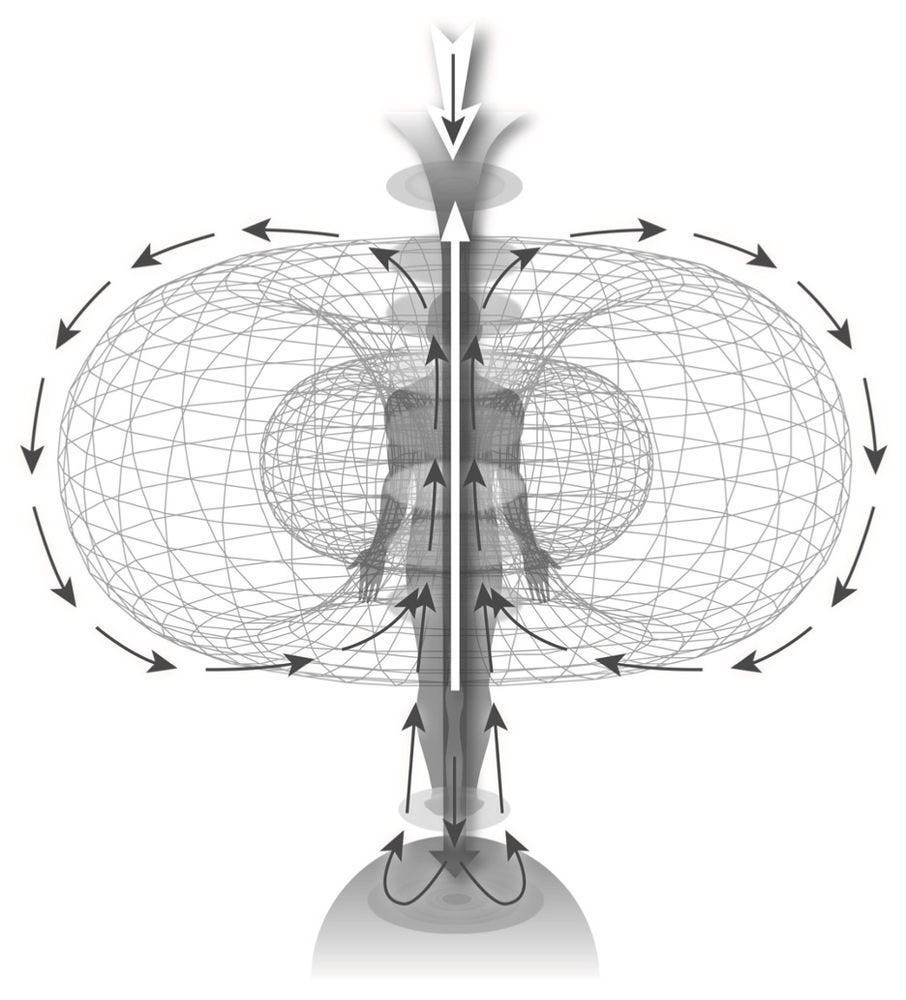
When fear is met with awareness rather than resistance, the Sacred Warrior residing in the solar-plexus chakra assists the heart in becoming a mediating field where re-regulation can occur. Through heart awareness, fear can be transformed into safety, clarity, and deeper listening. We’ll learn & practice a KMA that will facilitate this process.
In Module 6, we work toward coherence between heart, head, solar plexus, and throat/voice. When these centers are aligned, speaking one’s truth becomes less effortful and more relational. Authenticity is no longer something we push for - it emerges naturally.
The KMAs you have already learned now serve a new role. Rather than being techniques to perform, they become tools of inquiry and support - used with a now enhanced physical-sounding voice, when needed to access unconscious material, restore regulation, or deepen presence. In this way, sound becomes both a pathway into the psyche and a bridge into authentic dialogue.
Info. on the Korason Method: https://hughsmiley.com/korason-method/
Korasomi Training Circle Winter Semester starting Jan. 17th: https://hughsmiley.com/korasomi/